Ottawa households spend a long stretch of the year indoors. From late November to March the evenings are dark by five and the rooms have to work harder, and that is when the shortcomings of a living room show up. In the detached homes across Nepean, Orléans and older Kanata, the family room is often a good size but awkwardly shaped, with a fireplace, a window wall and a doorway to the kitchen all competing for the same perimeter. There is rarely a spare metre to give to a television stand.
Then there is the basement, which in this city is not an afterthought. Finished rec rooms are close to standard in Ottawa suburbs, and they are where the hockey gets watched, where teenagers migrate and where the treadmill lives. Ceilings are lower down there and the useful wall space is broken up by stairs, storage rooms and mechanical spaces. Add the number of Ottawa homes that now carry a permanent home office because of how much of the city works for or around government, and you get a lot of rooms doing two or three jobs at once. Freeing up floor and getting the screen onto a wall is one of the simplest ways to make those rooms cope.
The floor comes back to you
A television stand is a piece of furniture whose only job is to hold up something that does not need furniture. It occupies a metre or more of wall, projects half a metre into the room, and collects the objects that have nowhere else to live. Take it away and the room gets wider in a way that is out of proportion to the actual measurement.
The gain is not only square footage. It is circulation. A stand forces the sofa forward, which narrows the walkway behind it, which is the walkway everyone uses to get to the kitchen. Removing it lets the seating slide back, opens the path, and often means a room that felt full stops feeling full. In smaller homes this is the single biggest practical benefit, and it is why people who have done it in one room usually do it in the rest.
You also get the option of much lighter furniture underneath, or none at all. A slim console, a low bench, a plant. The wall carries the weight, so whatever sits below it is a choice rather than a necessity.
Your eyes end up where they should be
On a stand, the screen height is decided by whatever furniture you happen to own. That is a strange way to make the decision, because screen height is one of the few things that genuinely affects how a room feels to watch in. Too low and you are looking down, which is why so many people end up slouched into a strange shape by the end of a film. Too high and your neck holds a mild extension all evening.
Mounting takes that decision away from the furniture and gives it to you. The screen can sit exactly where your eyes land when you are sitting the way you actually sit, which for most rooms is lower than people expect. It can also be levelled properly, squared to the wall and centred on the seating rather than centred on the wall, which are not the same thing in a room with an off-centre sofa.
The difference is subtle to describe and obvious to live with. Everyone notices a screen that is wrong. Almost nobody notices a screen that is right, which is exactly the point.
It takes a heavy object out of a toddler's reach
Modern televisions are wide, thin and top-heavy, and the stands that come in the box are designed to be inexpensive rather than immovable. A screen on a low unit sits at exactly the height a small child grabs, leans on, or pulls themselves up against. Furniture and television tip-overs are a hazard that safety authorities and manufacturers both warn about, and the warning exists because it is a real thing that happens in ordinary living rooms.
Once the television is on the wall, that whole category of worry disappears. There is nothing to pull, nothing to climb, nothing to knock while chasing a ball through the room. Parents describe it as one less thing to keep half an eye on, which in a house with a two-year-old is worth more than the tidier look.
Pets are the quieter version of the same problem. A dog's tail clears a low unit surprisingly often, and cats treat any horizontal surface as an invitation. Getting the screen up and the cables out of reach removes the daily low-level risk of a chewed cord or a nudged screen, and it saves the sources from being sat on.
The room reads as finished
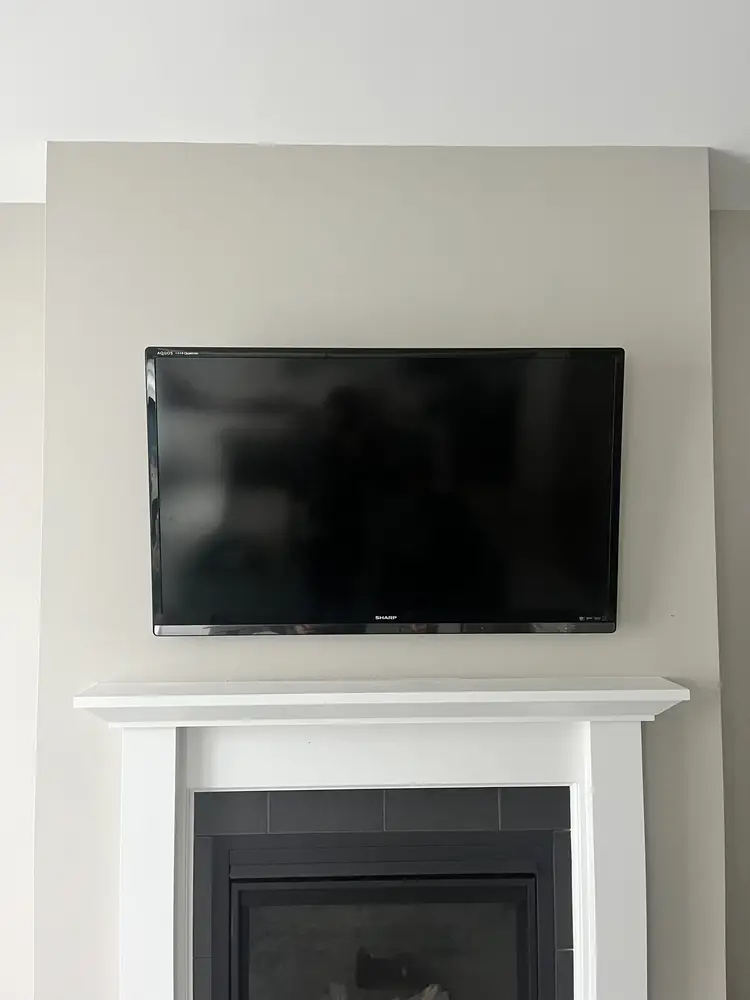
There is a reason every show home and every hotel room mounts the television. A screen sitting on a stand looks like an object that was placed in the room. A screen on the wall looks like part of the room. It is the difference between something that arrived and something that belongs.
Flush, level and centred does most of the work. When a screen is square to the wall and sits close to it, the eye stops registering it as clutter and starts reading it the way it reads a large picture frame. Slim-profile arrangements exaggerate this further, and a recessed installation takes it further still, though whether that is possible in your wall is something to assess rather than assume.
It changes what you can do with the rest of the wall too. Shelving, artwork and lighting can be arranged around the screen deliberately instead of squeezed in beside a bulky unit. Rooms that felt organised around the television start to feel like rooms that simply have one.
The cable problem, solved properly
The thing that undoes most wall mounting is the bundle of cables hanging down the wall underneath. It draws the eye straight to itself and cancels out the clean look you paid for. A television on a stand at least hides its own mess behind the furniture. A mounted television without a plan for the cabling advertises it.
Done properly, the wall below the screen is simply a wall. No loop of black cable, no adhesive clips, no trunking painted to almost match. Whether the tidiest option is available depends on what your wall is made of, what is behind it and where the power sits, which is a site assessment rather than a promise made in advance. There is nearly always a route to a clean result, and knowing which one applies to your room is most of the job.
It is worth thinking about at the same time as the mounting rather than afterwards. Where the sources will live, whether you want them visible, how a console or a soundbar fits in: all of that is easier to solve before anything goes on the wall.
Cleaning stops being a project
This benefit sounds trivial until you have lived with it. The area behind and beneath a television stand is one of the least accessible places in a home, and it collects dust, cables, remote controls, small toys and whatever the vacuum pushes under there. Cleaning it means moving a heavy screen or reaching blind behind it.
With the television on the wall, the floor underneath is open. A vacuum passes straight through. A mop reaches the baseboard. Dust does not accumulate in a nest of cabling because the cabling is not sitting in a heap on the floor. Households with allergies notice it more than most.
The screen is easier to keep clean as well, because it is no longer at the height where hands and sleeves brush past it. Fingerprints on the lower third of a panel are a stand problem more than a television problem.
You gain options you did not have before
A stand offers one position. A wall offers several, depending on what suits the room:
The point is that mounting is not one thing. Matching the arrangement to how the room is actually used is the part that determines whether you are happy with it in a year, and it is worth a conversation before anything is chosen.
- A fixed, close-to-the-wall arrangement gives the cleanest look where the seating faces the screen straight on.
- A tilting arrangement helps where the screen sits a little higher than ideal and the picture needs to be aimed down at the seats.
- A full-motion arm lets one screen serve two areas, such as a sofa and a kitchen island, or swing out for a better angle and tuck away afterwards.
- Corner and off-wall positions become viable in rooms where no flat wall faces the seating.
- A screen can be placed high in a bedroom, a gym or a workshop where a stand would simply be in the way.
Resale, staging and moving day
Agents stage rooms to look larger, and removing bulky furniture is the first thing they do. A wall-mounted television achieves the same effect permanently. Buyers walking through a home read open floor and clean walls as space, and a living room without a television unit photographs better, which matters when most viewings begin online.
It also signals that the house has been looked after. A tidy, level screen with no visible cabling suggests work done properly, in the same quiet way that neat trim and consistent hardware do. It is a small impression, but small impressions accumulate across a viewing.
The common worry is what happens when you leave. The honest answer is that it is a manageable and familiar situation. Screens come off walls and go up in new ones routinely, and it is the kind of thing to plan a week or two before the move rather than the morning of. If you are renting, agreement with the owner beforehand is the sensible route, and it is a far more ordinary request than most tenants expect.
The honest trade-offs
Mounting commits you to a position. Changing your mind later means a wall that needs attention, so the deciding is worth doing carefully, ideally by sitting in your own seat and looking at where the screen would land rather than guessing from across the room.
You also need to think about where the sources go. A stand holds a console, a receiver and a streaming box without anyone planning for it. A bare wall does not, so that question moves to the front of the process instead of the back.
And it is not a job to improvise. Walls differ enormously in what they are made of and what sits behind them, and the consequences of getting that wrong range from a crooked screen to damage that costs far more to repair than the installation would have. That is why the assessment matters as much as the work. For most households none of these trade-offs outweigh the gains, but they should be decided rather than discovered.
What this changes in an Ottawa home
Winter is the honest test. When a family is inside for five months, the rec room stops being a bonus space and becomes the main one, and every metre of floor matters. Basements are also where cabling clutter is worst, because the room usually accumulates a console, a sound system, a router and whatever else got moved down there. Getting the screen up and the cables under control turns a cluttered basement into a room people choose to be in.
The great rooms in newer Barrhaven, Kanata and Stittsville builds present the opposite challenge. They are open and generous, with the kitchen, dining and living areas sharing one volume, which sounds easy until you try to position a television. A stand looks lost in that much space and pins the seating into one arrangement. Mounting lets the screen sit at the right height for both the sofa and the island, and in those rooms a full-motion arrangement that serves two zones is often the thing people are most pleased with afterwards.
The home office point is specific to this city too. A great many Ottawa households now have a permanent working setup in a spare bedroom or a basement corner, and those rooms are always short of surface. Putting a screen on the wall gives back the desk and the floor at the same time, and it makes a small room feel like a deliberate workspace rather than a corner that got taken over.
What this costs in Ottawa
Flat pricing by screen size, taxes and the wall mount quoted before you book. No hourly rate, no surprise line items on the day.
Your exact total, tax included, takes about a minute on the price tool. A $25 deposit holds the slot and comes off the final bill.
Questions we get asked
Does wall mounting actually make a room feel bigger?
Noticeably, yes, and more than the measurement suggests. Removing the stand frees floor area, but the bigger effect is that the seating can move back and the walkways open up. Small rooms benefit the most.
Is a wall-mounted television safer with young children?
It removes the main risk, which is a top-heavy screen being pulled or leaned on at a toddler's height. Tip-over hazards are something both manufacturers and safety authorities warn about, and getting the screen and its cables out of reach ends that concern. It also stops pets from knocking the set or chewing the cabling.
Will there be cables hanging down the wall?
There should not be, and if there are, half the benefit has been lost. What is achievable depends on what your wall is built from and where the power is, so it is confirmed during the assessment. Plan it at the same time as the mounting rather than afterwards.
What happens to the wall when we move or change our minds?
It is routine and manageable. Taking a screen down and making the wall good again is ordinary work, and it is easier to arrange calmly in advance than in the middle of a move. Renters should get the owner's agreement in writing before anything goes up.
Do I still need furniture under the television?
Only if you want it. Many people keep a slim console for a console, a streaming box or a soundbar, and others go with nothing at all. Deciding this early is helpful, because it affects where things need to end up.
Is a finished basement a good place for this in Ottawa?
It is one of the best, because basement rec rooms tend to be where clutter and cabling collect. Lower ceilings mean the height needs more thought than upstairs, since the screen has to sit comfortably for people on a sofa rather than up near the joists. It is worth having the room looked at, because basement walls vary a lot across Ottawa's housing stock.
Our great room is huge. Do we still gain anything by mounting?
Yes, though the gain is different. In a large open room the benefit is less about floor space and more about placing the screen where it works for the sofa and the kitchen at once, without a stand dictating the layout. Large open rooms are also where a full-motion arrangement pays off most.
Ready to get it on the wall?
Answer a few questions and you will see your exact total, taxes in, before you book anything. Book now, mounted today, not next week.