In Ottawa, the television decision is very often a basement decision. A large share of the housing here, from the 1970s and 1980s detached homes through Nepean and Alta Vista to the sprawling later builds in Kanata and Stittsville, came with a finished lower level, and that is where families genuinely spend five months of the year. From November onward the basement rec room becomes the warmest, darkest and most-used room in the house, and the wall you choose down there earns more hours than anything upstairs.
Upstairs the question is different, and it is almost always the same question: the fireplace. Newer Barrhaven and Orleans builds put a stone or tile feature wall in the middle of a wide open great room, the furniture points straight at it, and the television has nowhere obvious to go except above it. Meanwhile the older brick homes in Westboro and the Glebe offer small, well-proportioned rooms with radiators, awkward corners and plaster that does not behave the way modern drywall does. Before you book anyone in this city, settle which of those situations you are actually in. The honest answers are very different.
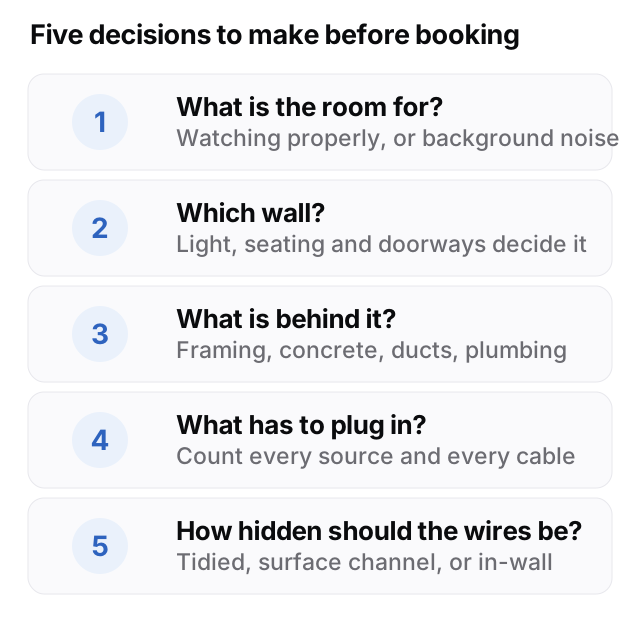
Start with the room, not the television
Most people begin with the TV and work outward. It is better to begin with the room and work in. A mounted television is a semi-permanent change to a space you live in every day, and the bracket behind it is the least interesting part of the decision. What matters is where people sit, what the room is actually used for, and what you want that wall to look like when the screen is off.
Spend ten minutes sitting in the room the way you really use it, not the way it looks in a photograph. Which seat does everyone want? Does the sofa get pulled around when company comes? Is there a chair nobody sits in because the afternoon light lands on it? Those answers set the wall, the height and the type of mount. They are free to change now and expensive to change later.
Be honest about what the room is for
A living room where the television murmurs in the background during dinner is a different problem from a basement built for films. A bedroom TV watched lying down is different again. Before you book anyone, decide which of those you have, because the right answer for one is the wrong answer for another.
If the room does two jobs, say so out loud. Plenty of homes now have one room that is a family room, a games room and a home office depending on the hour. That is fine. It simply means the install has to serve the seating position you use most and stay tolerable for the others, which usually points toward a mount with some adjustment in it rather than a rigid one.
The room's purpose also tells you how much you should care about glare, sound and cable tidiness. A dedicated media room earns a careful, permanent, fully concealed setup. A casual kitchen screen does not need the same treatment and should not be planned as though it does.
Pick the wall before you pick anything else
There is usually one obvious wall and one or two nobody has considered. Walk the room and test each candidate against four things: where the light comes from, where the seating naturally faces, what furniture already lives there, and how people move through the space.
Light is the factor most often ignored. A wall directly opposite a large window will fight you every sunny afternoon, and no mount fixes that on its own. Sometimes turning a room ninety degrees solves a glare problem that would otherwise need new blinds, a different screen, or an arm that swings the picture away from the window.
Traffic matters too. A television beside a doorway gets bumped. One above a walkway becomes something people duck under. If a wall only works when nobody is moving through the room, it is not really the wall.
What is behind the wall changes what is possible
Homes are built out of very different things: wood framing under drywall, plaster over lath in older houses, poured concrete, concrete block, brick veneer, natural stone, and occasionally a decorative wall that looks solid and is not. Each of those changes how large a screen the wall can carry, whether the mount can move, and whether cabling can be concealed inside rather than on the surface.
This part is genuinely an installer's job, and it is the main reason we assess a wall before committing to a plan. What a good installer is checking is easy to describe even though the work is not: what the wall is made of, what is structurally behind the finished surface, what services may be running through it, whether the surface is flat and true, and whether it will carry the size and the movement you want for years rather than for a weekend.
You do not need to work any of that out yourself before you call. You only need to describe what you have. If the wall is a fireplace surround, say so. If the basement walls are concrete, say so. If the house is a century old, mention it. Those three sentences are usually enough for us to tell you what your realistic options are.
Count everything that has to plug in
The screen is one item. Almost nobody has only one item. A streaming box, a games console, a cable receiver, a soundbar, a subwoofer, a router that has quietly become part of the entertainment system, an old media player nobody wants to give up. Each one is a cable and a decision.
Decide where that equipment is going to live: in a cabinet under the TV, on a shelf beside it, in a nearby closet, or in another room entirely. That single choice shapes the mount, the wall, the concealment plan and the look of the room more than almost anything else you will decide.
Look at the power situation honestly as well. Where the outlets are now, relative to where the television is going, determines what a clean finish will involve. You do not have to solve it. You do have to notice it, because it is the thing that most often turns a short visit into a longer one.
Decide how much the wires matter to you
There are three broad outcomes and they take different amounts of effort. Cables can be left visible and simply dressed and tidied. They can be concealed on the surface so the wall reads as one clean line. Or they can disappear entirely, so the television looks like it grew out of the wall.
Which is right depends on the wall, on whether you own the home, on how long you plan to stay, and on how much a visible cable genuinely bothers you day to day. Plenty of people arrive certain that everything must be hidden and then decide, once they understand what their particular wall allows, that a tidy surface solution suits them perfectly well.
Have an opinion before the installer arrives, but hold it loosely. The wall gets a vote.
Questions worth asking before you book
A short conversation up front prevents almost every bad TV mounting experience. Most complaints we hear about other jobs trace back to something nobody asked. These are the questions that actually earn their keep.
- Ask whether someone will assess the wall before any work begins, and what happens if it turns out to be different from what everyone expected.
- Ask exactly what is included in the visit, including testing the picture and sound, tidying up afterwards, and showing you how everything works before they leave.
- Ask whether they carry insurance and what the warranty covers if something loosens or fails months later.
- Ask what height they would recommend for your seating and why, ideally before you tell them the height you had in mind.
- Ask what they would suggest instead if the wall turns out not to suit your first choice, so you are not making that decision on the spot.
- Ask roughly how long they expect to be in your home so you can plan the rest of the day around it.
What a job done right actually looks like
A finished install should be level, and it should look level from the seat you use, which is not always the same thing in an older house. The television should be centred on the seating rather than on the wall, unless those happen to agree. There should be no slack cable hanging in a loop, no marks on the wall, and nothing left on the floor.
The mount should feel solid when the screen is nudged, with no creak and no shift. If it tilts or extends, it should move smoothly, stay exactly where it is put, and come back without a fight. Everything you own should be plugged in, switched on and confirmed working before anyone leaves, and the room should look better than it did when we arrived.
If any of that is missing, the job is not finished. A good installer would rather stay another twenty minutes than leave behind something that will quietly bother you every evening for years.
How to get the room ready
You do not need to do much, but a few minutes of preparation makes the visit shorter and cleaner. Clear the wall and roughly two metres of floor in front of it. Move breakable things out of the room rather than to the edge of it. Have the remotes, the passwords for any streaming accounts and the television's own paperwork somewhere you can lay hands on them.
If an old television is coming down, decide in advance where it is going to end up. If there are pets or small children in the house, plan to keep them occupied elsewhere for the working part of the visit. And know where the installer should park and which door to use. In some homes that takes two seconds to sort out, and in others it is the hardest part of the day.
Planning a mount in an Ottawa home
Two things shape more Ottawa installs than anything else: the finished basement and the feature fireplace. If the television is going downstairs, plan around ceiling height first. Ottawa basements frequently have lower ceilings, bulkheads carrying ductwork across the room, and poured concrete on the exterior with a framed wall built in front of it. That combination changes what can go where, and it is much better mentioned on the phone than discovered on the day.
If the screen is going upstairs onto a stone or tile surround in a Kanata or Barrhaven great room, the decision to settle is whether you truly want it there. Those rooms are often large enough that a second wall would sit lower and view better, and people are frequently relieved to hear that said plainly. If the feature wall really is the only option, and in many open-concept plans it is, then the useful conversation is about making that height comfortable rather than about whether to accept it.
The third Ottawa-specific factor is the home office. This is a government and technology town, and a great many houses have a spare bedroom that quietly became a permanent workspace with a screen in it. Those rooms follow their own rules: a desk seating position, a much shorter viewing distance, and often a wall shared with a bedroom. Decide whether that screen is for work, for watching, or for both, before anyone plans a bracket for it.
What this costs in Ottawa
Flat pricing by screen size, taxes and the wall mount quoted before you book. No hourly rate, no surprise line items on the day.
Your exact total, tax included, takes about a minute on the price tool. A $25 deposit holds the slot and comes off the final bill.
Questions we get asked
Do I need to know where my studs are before I book?
No. Assessing what is behind your wall is part of the job and not something you should take on yourself. All we need beforehand is a plain description of the wall, such as drywall, plaster, concrete, brick, stone or a fireplace surround, plus a rough idea of the age of the building.
Should I supply the mount, or should the installer bring one?
Either works, but tell us which before the visit. If you already own a mount, we will check that it genuinely suits your television and your wall before we use it. If you would rather we supply one, we will match it to the screen, the wall and the movement you actually need rather than the one with the longest feature list.
Can a television be mounted on any wall?
Almost, but not equally well. Nearly every wall type can carry a screen with the right approach, but the wall decides how large that screen can be, how much the mount can move, and whether cables can be concealed inside. That is why the wall assessment comes before the plan rather than after it.
Should I mount before or after painting?
Paint first if painting is already on the list. It is far easier to paint a clean, empty wall than to cut in around a bracket, and you avoid the small touch-ups that follow any wall work. If the paint is fine as it is, there is no reason to wait.
What happens to the TV if I move?
It comes down, and it goes up again somewhere else. Taking a television and mount off a wall is short work, and the wall is left ready for patching and paint. If you are moving locally, having the same people remove and reinstall it saves you explaining your setup twice.
How far ahead do I need to book?
Usually not far at all. Most jobs are single-visit work and we deliberately hold near-term capacity, because the whole point of book now, mounted today, not next week is that you are not planning your living room around a three-week wait. Larger or multi-room projects are worth booking with a little more notice.
Our basement walls are poured concrete. Does that limit what we can do?
It changes the approach more than the outcome. Concrete supports a television very securely, but it affects whether cabling can be concealed inside the wall and how the mount is planned, so we want to know about it before the visit. Many Ottawa basements also have a framed wall built in front of the concrete, which is a different situation again, and we confirm which one you have on site.
The fireplace is the only wall our furniture faces. Is that a bad idea in an Ottawa great room?
It is not automatically a bad idea, but it deserves a real conversation. Many newer Barrhaven and Kanata great rooms have tall mantels and deep hearths that push a screen higher than is comfortable for a long evening. We look at your seating distance and eye level first, and if the height would be uncomfortable we will say so and walk you through the alternatives.
Ready to get it on the wall?
Answer a few questions and you will see your exact total, taxes in, before you book anything. Book now, mounted today, not next week.