Ottawa has a particular relationship with television height because so much viewing here happens in the basement. In the finished lower levels that come with almost every detached home from Nepean to Stittsville, the furniture is usually a deep sectional, the ceiling is lower than upstairs, and there is often a bulkhead running across the room carrying ductwork. A deep sectional puts your eyes lower than a formal sofa would, while the bulkhead pushes the screen higher. Those two forces work against each other, and the result is a lot of basements where the picture sits well above where it should.
Upstairs the pressure comes from the fireplace. Newer great rooms in Barrhaven, Kanata and Orleans centre on a tall stone or tile feature wall, frequently with a raised hearth and a substantial mantel, and the screen has nowhere to go but above all of it. In the older brick homes of the Glebe and Westboro the problem is different again, with high ceilings and picture rails tempting people to mount far higher than the small rooms can comfortably carry. In a city where the television runs all winter, getting this right is worth the ten minutes it takes.
The rule is simpler than people expect
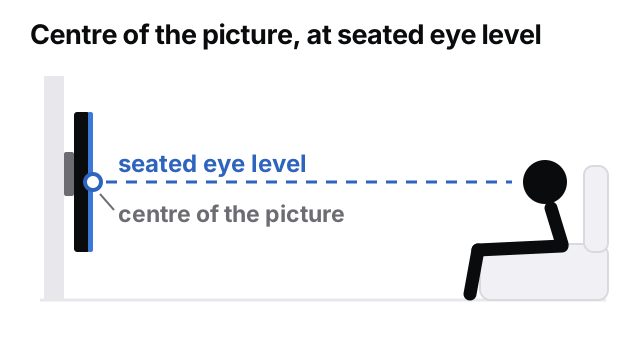
For a room you sit in and watch properly, the centre of the screen should land at or near the eye level of a seated person. That is the whole rule. Everything else in this article is about the situations where you cannot follow it exactly, and what to do instead.
It sounds obvious written down, and yet most televisions we are asked to look at are mounted too high. There is a reason for that. A screen looks better on the wall when it is up high, the way art does, and it feels wasteful to leave a big empty space above it. But a television is not art. It is something you stare at for three hours at a stretch, and your neck keeps score.
The best test is the one you can do tonight. Sit where you actually watch, look straight ahead at the wall, and notice where your eyes land. That point is roughly where the middle of the screen wants to be. Almost everyone is surprised by how low it is.
Seated eye level is not one number
There is no universal height, and anyone who quotes you a single measurement for every home is not paying attention. Seated eye level varies with the furniture more than with the person. A deep, low sectional puts you considerably lower than a firm upright sofa. A dining chair is higher than both. A bar stool is higher again. A bed with a headboard puts you somewhere else entirely.
The people also matter. If the household is mostly adults watching from a sofa, that is straightforward. If the room is shared with children who sit on the floor, with a grandparent in a high armchair, and with whoever ends up on a stool at the counter, the honest answer is to serve the seat that gets the most hours and accept a small compromise for the rest.
This is why a good installer will ask you to sit down before anything is decided. Not to be polite. Your furniture holds the answer, and it is different in every house.
Distance changes what you can get away with
The further back you sit, the less a small error in height hurts. When the sofa is well back from the wall, your eyes travel a shallower angle to reach the top of the screen, so a slightly higher position still feels natural. When the sofa is close, the same height becomes a steep upward look and gets uncomfortable quickly.
That single fact explains a lot of bad installs. A height that works beautifully in a long suburban family room feels wrong in a small apartment where the sofa is a couple of metres from the wall. Copying a friend's setup rarely works, because you are almost certainly not sitting at the same distance from your wall as they are from theirs.
It also explains why the measurement we most want from you before a visit is not the size of the television. It is the distance from where you sit to the wall you are considering. Give us that number and we can tell you a great deal before we arrive.
Why too high feels wrong even when it looks fine
Two things happen when a screen is mounted above comfortable eye level, and only one of them is obvious. The obvious one is your neck. Looking up for an entire film is tiring in a way that builds slowly, and people usually blame the film.
The second is the picture itself. Most televisions look their best when you are square on to them, and they lose contrast, brightness and colour accuracy as your viewing angle moves off centre, vertically as much as horizontally. A screen well above you is showing you a slightly worse image than the one you paid for, and because it degrades gradually, most people never realise anything is wrong. They just find the picture a bit flat and assume that is how it looks.
There is a third effect that is harder to describe. A screen at eye level feels like a window into the room it is showing. The same screen a foot higher feels like a monitor bolted to a wall. It is a small difference in centimetres and a large difference in how a room feels to spend an evening in.
The fireplace problem
This is the single most common height conversation we have, and it deserves a straight answer. Mounting above a fireplace almost always puts the screen higher than is ideal, because the mantel, the surround and often a raised hearth set a floor that nobody can move. In a room with a tall stone feature wall, the screen can end up well above where anyone would choose to put it.
That does not automatically make it wrong. If the seating is well back, if the mantel is low, and if the room only really works with the furniture facing the fireplace, then above the fireplace can be a perfectly good outcome, particularly with a downward angle to bring the picture back toward the seating. Plenty of rooms are built so that no other arrangement makes sense, and pretending otherwise is not helpful.
What we will always do is tell you honestly which situation you have before any decision is made. If the height would genuinely be uncomfortable, there are usually options: a different wall that nobody had considered, a system that brings the screen down and forward for watching and returns it flush afterwards, or a rethink of the seating. The worst outcome is the one where nobody raises the question and you find out over the following year.
Rooms where the rules change
Eye level while seated is the right target for rooms where you sit and watch. Plenty of rooms are not that, and in those the rule bends.
- In a kitchen, the screen is usually watched standing or perched at a counter, so it goes higher than a living room screen and generally wants a downward angle.
- In a bedroom, the viewing position is lying down or propped against a headboard, which puts the eye line lower than people expect and usually calls for a lower mount than instinct suggests.
- Above a bar or in a games room, people are standing or on stools, so the screen sits high on purpose and the angle does the corrective work.
- In a home gym, the viewing position may be flat on a bench or upright on a treadmill, and those want opposite things, so decide which one the screen is really for.
- In a home office, the screen doubles as a second display at desk distance, which means it wants a lower, closer position much more like a monitor than a television.
- In a child's room or playroom, the audience is often on the floor, and mounting for adults leaves the actual viewers craning upward every day.
Screen size is part of the equation
Height is not measured to the bottom of the television, it is measured to the middle of the picture, and that means a larger screen changes the whole arrangement. Swapping a modest screen for a much larger one on the same bracket position moves the centre of the picture upward and can turn a comfortable install into an uncomfortable one without anyone touching the wall.
There is also a practical floor. If the screen sits above a console, a fireplace or a radiator, there is a minimum clearance below it before things look wrong or get in the way. Sometimes the honest conclusion is that the television you have chosen is too large for the wall available, and that is much better discovered before it is on the wall than after.
If you are planning to upgrade the screen in the next year or two, say so. It is a small piece of information that changes what we would recommend today.
What a careful installer actually does
Getting height right is not guesswork and it is not a formula either. We sit in your seat, at your distance, in the light you actually watch in. We check the sightline from every regular seating position in the room, not just the best one. We look at what sits below the screen and what is above it, and at whether the wall itself is level and true, because in older homes floors and ceilings frequently disagree.
Then we show you. Before anything is committed, you should be able to see where the screen is going to sit and say yes or ask for it to move. Every good install includes that moment, and it takes two minutes. If someone puts a television on your wall without ever asking you to look at the proposed position from the sofa, that is a warning sign.
The last thing we look at is light. A height that is perfect for your neck can put the screen directly in line with a window reflection, and that is worth catching before the decision is final rather than on the first bright evening.
Living with the decision
The strange thing about height is that you never notice it when it is right. The screen simply feels like it belongs on that wall, you sit down, and nothing about the room asks for your attention. Get it wrong and it is the opposite: a small irritation that shows up every single evening and never quite fades into the background.
It can be changed later, and we do change it for people, though it means repairing and repainting the wall. It is far less trouble to spend ten minutes on the question at the start. Of all the decisions involved in putting a television on a wall, this is the one most worth slowing down for.
Getting the height right in an Ottawa home
Start with the basement, because for five months of the year that is the room that matters. Ottawa rec rooms are typically furnished with a low, deep sectional that people sink into, which drops seated eye level well below where it would be on an upright sofa. If the height is set to the wall rather than to that furniture, the screen ends up too high and stays that way through every long winter evening. We sit on the sectional before deciding anything.
Bulkheads complicate it. A duct run crossing a finished Ottawa basement often occupies exactly the wall space where the top of the screen wants to be, which forces the whole installation upward. When that happens the honest options are a downward angle to bring the picture back toward the seating, or a different wall entirely. It is worth checking both before accepting the compromise.
Upstairs in the newer suburbs, the great-room fireplace sets the height before anyone else gets a say. The saving grace in those rooms is distance: Barrhaven and Kanata great rooms are usually deep enough that a higher screen is tolerable, because the viewing angle stays shallower than it would in a small room. Where the seating is close to a tall mantel, we will say so and talk through the alternatives rather than mount it and hope. And in the older central neighbourhoods, high ceilings are the trap. A room with generous vertical space invites a high mount that the short viewing distance simply cannot support.
What this costs in Ottawa
Flat pricing by screen size, taxes and the wall mount quoted before you book. No hourly rate, no surprise line items on the day.
Your exact total, tax included, takes about a minute on the price tool. A $25 deposit holds the slot and comes off the final bill.
Questions we get asked
Is there a standard height for mounting a TV?
There is a common starting point, but no standard that fits every home. The right height depends on your seating height, your viewing distance and the size of the screen, and those three vary enormously between rooms. Anyone quoting a single number without seeing your furniture is guessing.
Is mounting above a fireplace always too high?
Not always, but it is higher than ideal more often than not. Whether it works depends on the height of the mantel, how far back your seating is, and whether a downward angle can bring the picture back toward you. We will tell you plainly which situation your room is in before anything is decided.
Does a tilting mount solve a TV that is too high?
It helps the picture without fixing the posture. Angling the screen down recovers contrast and colour that you lose when viewing from far off centre, which is a real improvement. You are still looking upward all evening, so a tilt is best used to refine a good height rather than to rescue a bad one.
How high should a bedroom TV be?
Lower than most people assume. The viewing position in a bedroom is lying down or propped against a headboard, so the eye line is well below where it would be on a sofa. We work from the bed rather than from the room, and the result is usually noticeably lower than a living room install.
Should the height change if I buy a bigger television?
Usually yes. Height is set to the middle of the picture, so a larger screen on the same mounting position pushes the centre upward and can make a comfortable setup uncomfortable. If a bigger screen is coming soon, tell us now so we can plan the position with that in mind.
Can the height be changed after installation?
Yes, though it involves repairing and repainting the area where the mount previously sat. It is straightforward work and we do it fairly often, usually after a room has been rearranged or a new screen has arrived. It is simply easier and cleaner to get the height right the first time.
Our basement sectional is very low. Does that change the mounting height?
It changes it quite a lot. A deep sectional can drop seated eye level well below where a firmer sofa would put it, which means the screen belongs lower than most people expect. We sit on your actual furniture at your actual distance before settling the position, because in Ottawa basements this is the single most common reason a television ends up too high.
Our great room fireplace is very tall. Will the TV be too high above it?
Possibly, and it depends on how far back your seating sits. Many Barrhaven and Kanata great rooms are deep enough that a higher screen still views comfortably, since distance flattens the viewing angle. If your sofa is close to a tall mantel and raised hearth, we will tell you that directly and go through the options with you before anything goes on the wall.
Ready to get it on the wall?
Answer a few questions and you will see your exact total, taxes in, before you book anything. Book now, mounted today, not next week.