Ottawa moves on a rhythm set partly by the public service and partly by the weather. Postings, transfers and job changes move families in and out of the region all year, which is unusual, and it means winter moves here are not rare events but a normal part of the calendar. A television carried across a driveway in February is a real consideration rather than a hypothetical one.
The typical Ottawa move also has a recognisable shape. Families trade a townhouse or a 1970s bungalow in Nepean or Alta Vista for a bigger build in Barrhaven, Kanata or Orleans, and the great room in the new house usually has a fireplace on the feature wall, which is not where the old mount was designed to go. Retirees go the other direction, downsizing from a suburban house with a finished basement to a condo in Westboro, the Glebe or Little Italy, where the walls and the rules are both different. Students fill Sandy Hill and Old Ottawa South at the end of August. Each of those moves has the same television problem and a slightly different answer.
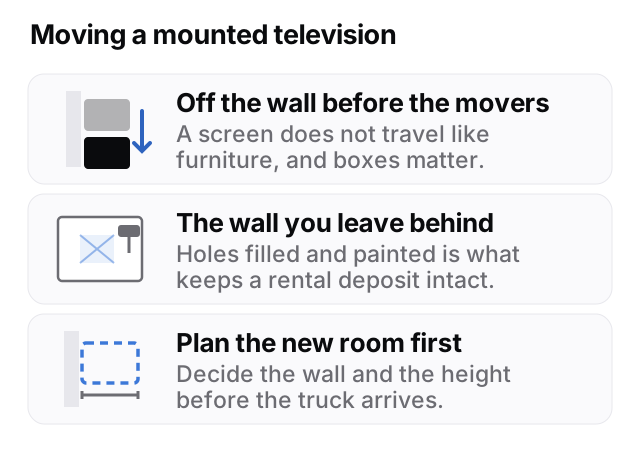
The screen does not travel like furniture
Everything else in a house moves in a predictable way. A sofa goes on a truck. A television that is on a wall is a different category: it is fragile in a way that does not look fragile, it is attached to the building, and it is usually the last thing anyone thinks about and the first thing that gets damaged.
Most movers will not take a screen off a wall. Many will not accept liability for a flat panel at all unless it is in its original carton or a purpose-made crate, and the original carton is usually long gone. So the television ends up carried loose, laid flat across a car seat, or wrapped in a blanket in the back of the truck, and flat panels do not forgive pressure in the middle of the glass.
Handled properly it is a small job at both ends and nothing goes wrong. Handled on moving morning with the truck waiting, it is the most expensive mistake of the whole move.
Getting it off the wall before the movers arrive
Book the takedown as its own appointment, ahead of the move rather than on the day. A screen already down, boxed and standing safely out of the way is one less decision for everyone in the house.
If you still have the original carton, use it. It is the single best thing you can do for a television that is going to travel, and it is worth checking the basement or the storage locker before assuming it has gone. If it has, a proper flat-panel moving box or crate is the next best answer and is a normal thing to arrange.
A screen should travel upright, on edge, never laid flat with anything resting on it. It should not sit where something can shift into it, and it should not spend a January night in an unheated vehicle if that can be avoided, because a cold panel brought straight into a warm room can condense inside.
Photograph the back before anything is unplugged. Which cable went where is obvious now and completely gone three weeks later in an unfamiliar house.
Does the mount come with you?
Sometimes. It depends on three things: the mount, the new television, and the new wall.
A mount is matched to a screen's mounting pattern and to a weight range. If the same television is going to the new house, the mount will usually still suit it. If you are upgrading the screen at the same time, which is very common during a move, the old mount may not fit the new one or may not be rated for it, and that is not a fit anyone should force.
The new wall matters just as much. A mount that was right on a wood-framed wall in a bungalow is not automatically the right hardware for a concrete condo wall or a brick chimney breast, and what holds it there does not transfer between those situations at all.
There is also the question of whether the mount stays as part of the sale. Buyers often assume a wall-mounted television and its bracket are included, so if you intend to take either, say so in writing during the transaction. It is a genuinely common source of friction on closing day.
The wall you are leaving behind
When a screen comes off a wall it leaves holes, and depending on how it was installed it may also leave a bracket, a recessed plate, a cut-out or a length of channel. Somebody has to deal with that.
If you are selling, that wall will be photographed and walked past by every viewer. A patched, filled and painted wall reads as a well-kept house. A bare bracket with cables hanging out of it reads as unfinished work and invites questions about what else was done in a hurry.
If you are renting, this is a deposit conversation. Most leases expect the wall to come back in the condition it went out in, and most owners are reasonable about a properly repaired wall and much less reasonable about being handed a repair job.
Either way, plan the making-good at the same time as the takedown rather than as an afterthought. It is the same visit, it is quick, and doing it later means arranging access to a house you no longer live in.
Plan the new room before the truck arrives
The best moment to decide where the television goes in the new place is while the room is still empty and you can actually see it.
Walk it and answer a few things. Where will people sit, and how far from the wall. Which walls have windows opposite them, because a screen facing a window has glare on it for part of every day. Where is the power, and where does the internet come into the house. Is there a fireplace, and is everyone going to want the screen above it even though the seating says otherwise.
The layout you sketch in an empty room is almost always better than the one you settle for after the sofa has landed, because once furniture is in place people arrange the room around wherever the cables happen to be rather than around where they want to sit.
Take measurements and a few photographs of the empty room and send them when you book. A good installer can tell you a great deal from that, including whether the screen you already own is the right size for the new room at all.
A new build is not the same as an older house
In a brand-new home the walls are predictable, everything is straight, and the surfaces are perfect, which cuts both ways: the work is straightforward and there is no forgiveness at all for a mark on fresh paint. Many new builds also have a prewired media position on a designated wall, so find out what your builder actually put in before deciding the screen goes elsewhere. If the house is still under construction, this is the moment to ask for an outlet in the right place, because it is close to nothing now and a project later.
An older house is the opposite. Plaster over lath, additions built across three different decades, chimney breasts, previous owners' improvisations, and walls that are not quite flat. None of that is a problem. It is simply why an installer wants to see the wall rather than hear about it.
Condos sit in their own category, new or old. Concrete walls, building rules, elevator bookings and limits on what can be opened all apply, and they apply hardest in the week you move in, because everyone else is trying to book the same elevator.
Timing it around the move
The sequence that works is simple. Book the takedown and wall repair at the old place a few days before the movers come, so nothing depends on the busiest morning of your year. Move. Then book the new installation for a few days after you arrive, once the room is unpacked enough to work in and you have lived with it long enough to be sure about the wall.
Same-day is possible and occasionally necessary, and it is worth knowing that it removes every scrap of slack from a day that has none to spare. If the truck runs late, the installation moves. If a key is delayed, the installation moves.
The other timing point is the internet. In a lot of moves the screen is ready before the connection is, and no installer can do anything about a provider's appointment. Book that as early as you book anything.
Renters, owners and deposits
If you are moving out of a rental, get the wall repaired properly and get it done before the final inspection rather than promising it afterwards. If you are moving into one, get written agreement before booking anything, and ask at the same time what the owner will expect when you eventually leave.
Most owners are agreeable when the request is specific: a professional installation, on a named wall, with the wall made good at the end of the tenancy. Vague requests get vague answers. It also helps to know that in some buildings the decision is not really the owner's at all, because the corporation or the strata has rules of its own about what may be done to a wall.
If a wall is genuinely off limits, there are still good options, including floor stands and furniture-mounted solutions that give you most of the look without touching the building.
Where moves go wrong for televisions
Almost every problem we get called about after a move falls into one of these.
None of them are dramatic and all of them are avoidable with one phone call made a week earlier than it feels necessary.
- The screen travelled flat with something resting on it, and the panel did not survive the trip.
- The mount came off the old wall but the hardware holding it there stayed behind, so nothing matched at the other end.
- Nobody photographed the back of the television and reconnecting the equipment took a whole evening.
- The new wall turned out to be concrete or masonry and the old hardware was never going to work on it.
- The old wall was left with holes in it and an argument about the deposit followed.
- The installation was booked for moving day itself and the truck arrived four hours late.
Moving a television in Ottawa
Cold is the practical issue nobody plans for. A panel that has spent hours in an unheated truck or a cold garage should be allowed to reach room temperature before it is switched on, and a screen carried across an icy driveway is at more risk from a slip than from anything else in the move. If you are moving between November and March, keep the television in the cab or in the last load, and give it time indoors before anyone plugs it in.
The second Ottawa-specific point is the basement. Families moving within the region often go from a house where the main television lived in a finished basement rec room to one where it lives in an open great room, or the reverse. Those are different rooms with different light, different seating distances and often different wall construction, so the mount and even the screen size that worked in one can be wrong in the other. Poured concrete foundation walls are common down there, and a bracket that came off a drywall wall upstairs is not automatically the right answer in a basement.
Third is the new-build fireplace. If you are moving into a newer Barrhaven, Stittsville or Kanata home, look at that feature wall before the truck arrives and decide whether the screen is going above the fireplace or beside it. It changes the mount, the height and the wire plan, and it is far easier settled while the room is empty.
What this costs in Ottawa
Flat pricing by screen size, taxes and the wall mount quoted before you book. No hourly rate, no surprise line items on the day.
Your exact total, tax included, takes about a minute on the price tool. A $25 deposit holds the slot and comes off the final bill.
Questions we get asked
Will my movers take the television off the wall?
Usually not. Most moving companies will not remove anything fixed to a building, and many will not cover a flat panel unless it is properly boxed. Booking a separate takedown a few days before the move avoids the whole question and gets the wall repaired at the same time.
Can I use my old mount in the new house?
Often the mount itself is fine, especially if you are keeping the same television. What almost never carries over is the hardware that held it to the old wall, because a different wall type needs a different approach entirely. Tell us the new wall and we will confirm whether your mount can be reused.
Do you repair the wall where the old mount was?
Yes, and it is worth doing at the same visit. We fill and make good so the wall is ready for paint, which matters whether you are handing keys to a buyer or facing a final inspection with a landlord. Arranged later it means getting access to a home you have already left.
Should the takedown and the new installation happen on the same day?
We would rather they did not. Moving day has no spare time in it, and if anything runs late the screen is the thing that gets left. Takedown a few days before and installation a few days after gives both jobs room to go properly.
I no longer have the original box. What should I do?
Use a proper flat-panel moving box or crate rather than blankets and hope. Screens should travel upright and supported, never flat with weight on them. If the television has been anywhere cold, let it come up to room temperature indoors before switching it on.
Do I have to leave the mount for the buyers?
Only if the agreement says so, and that is exactly why it should be written down. Buyers frequently assume the bracket stays with the house even when the television does not. Settle it during the transaction and nobody is negotiating in a hallway on closing day.
We are moving in January. Is that a problem for the television?
No, it just needs a little care. Keep the screen out of an unheated truck overnight if you can, carry it upright and boxed, and let it reach room temperature before switching it on. We schedule winter takedowns and installs constantly and it is routine when it is planned.
Our new house in Barrhaven has a fireplace on the main wall. Will our old mount work there?
Possibly not. A fireplace wall usually puts the screen higher than a flat mount is comfortable with, so a tilting or pull-down mount is often the better answer, and the surface may be stone or tile rather than drywall. Send us a photo of the wall and we will tell you before moving day.
Ready to get it on the wall?
Answer a few questions and you will see your exact total, taxes in, before you book anything. Book now, mounted today, not next week.